


Hands that have stopped cooperating
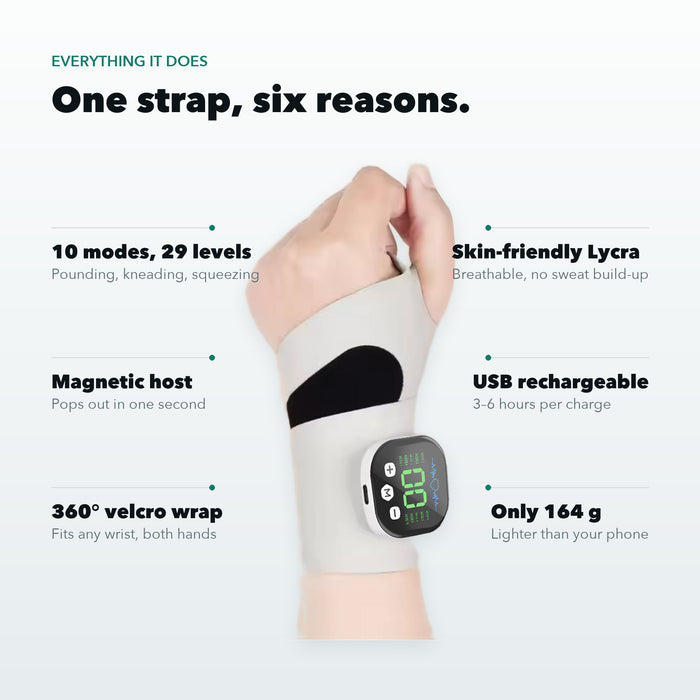
Fifteen minutes a day, sitting down. Ten EMS programmes, twenty-nine intensity levels, and a strap that goes on either hand in about four seconds.
- For mornings when your hands are stiff before your feet hit the floor
- For a grip that gives out before the job is done
- Three large buttons. No app, no phone, no setup.
- 164 g and cordless — light enough to forget you have it on
Does this sound like your hands?
- Your knuckles feel thick and stiff in the morning
- You've started using two hands for things you used to do with one
- You think about a jar before you pick it up
- You wake in the night and shake your hand out to get the feeling back
- Buttons, keys and jar lids have quietly become a negotiation
- Your grip gives out before the job is done
If three or more of those landed, this was built for you.

What EMS actually does
Small electrical pulses pass through the pad into your hand and forearm and make the muscle fibres contract and release — over and over — without you moving at all.
It's the same principle physiotherapists have used for decades. The difference is that this one is a strap you put on while you're sitting down.
Ten programmes change the rhythm — some tap, some knead, some hold and release. Twenty-nine levels mean you decide where it sits.
Built to be simple
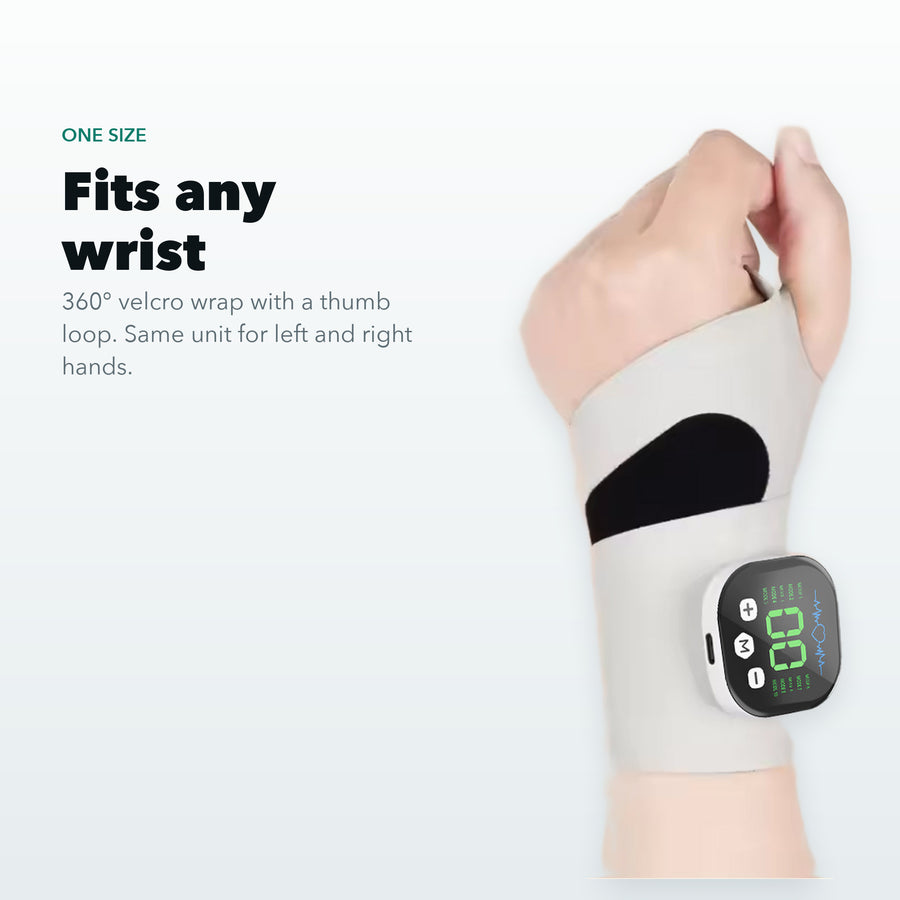
Either hand
360° velcro wrap with a thumb loop. Same unit, left or right.
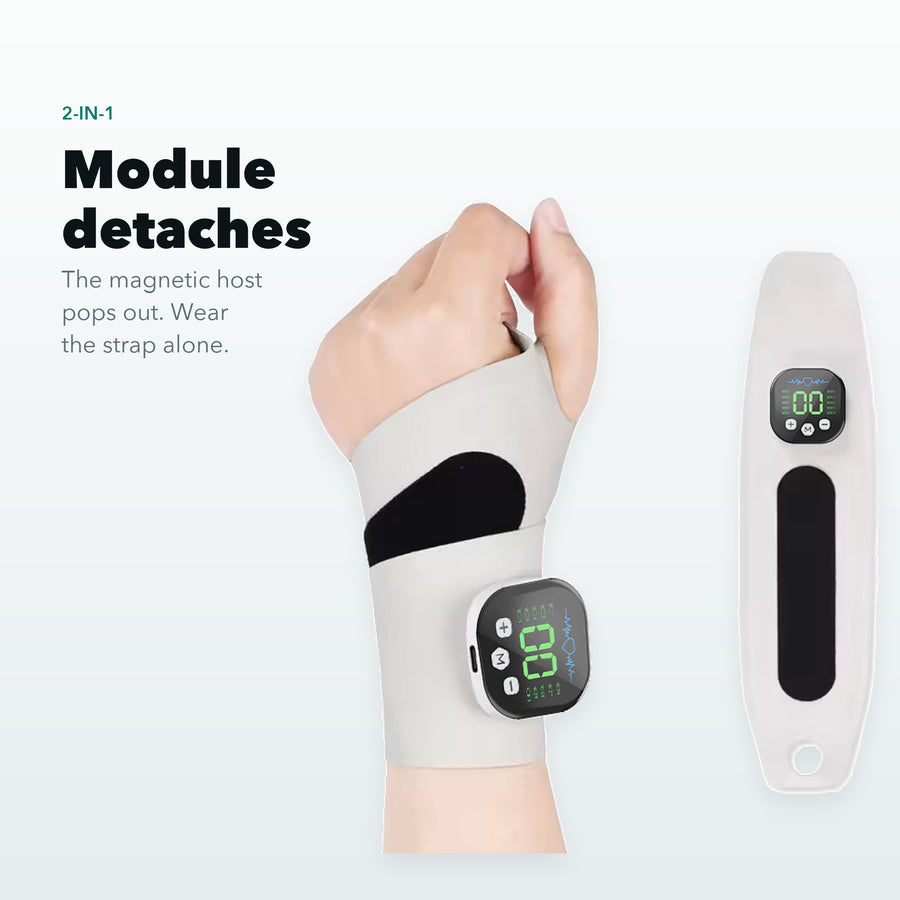
The control unit pops off
Magnetic. Take it off and the strap works as plain wrist support.
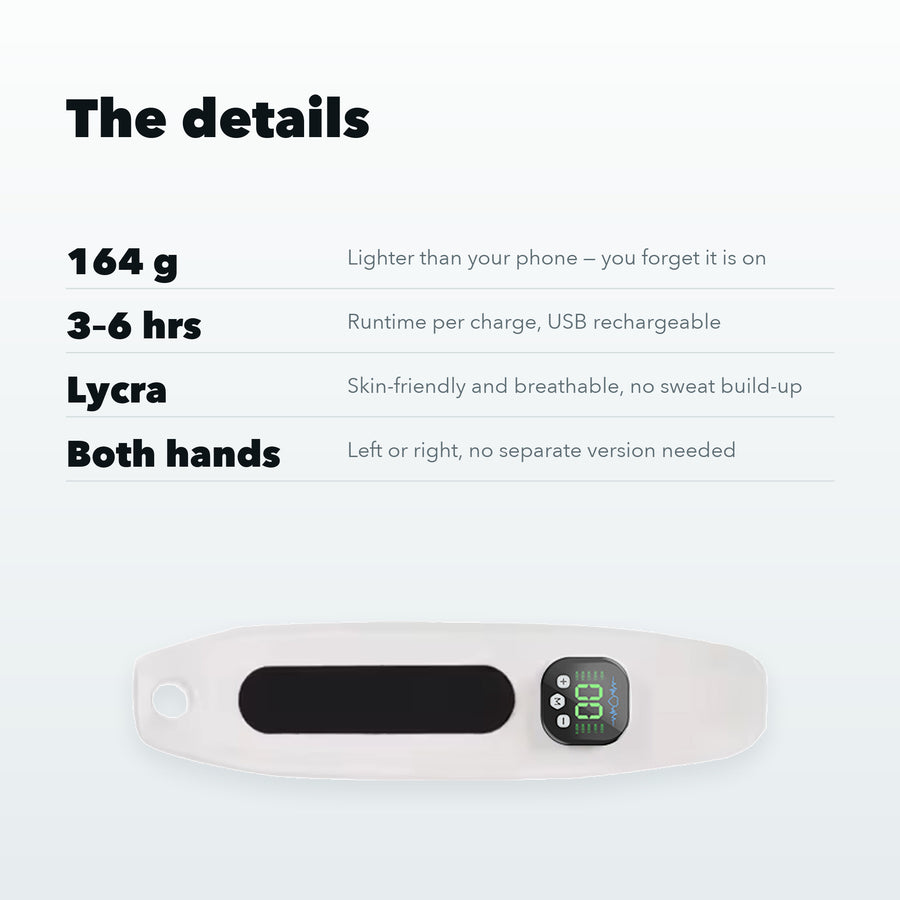
164 g, three to six hours per charge
USB-C. Nothing plugged in while you're using it.
Three buttons
Plus, minus, mode. That's the entire interface.
It will fit
The velcro runs the whole length of the strap, so it closes anywhere. Thin wrists, wide wrists, swollen knuckles in the morning — same unit.
The thumb loop keeps it from sliding while you use it.

What to expect
1
Normal. Not a sign it isn't working.
2–3
Fifteen minutes a day, every day.
Most people use it while watching something.
Buying this for a parent?
Can they put it on alone?
One strap, one velcro closure. Most manage it one-handed after the first try.
Is it too strong?
Level 1 is very light. Most people over 60 settle between 5 and 12 of 29.
Do they need a phone?
No. Three buttons on the unit. No app, no pairing.
What if they don't get on with it?
30 days, money back, no explanation needed.
Getting started
Wrap it around the wrist, thumb through the loop, press the velcro closed. Start at level 1 and work up until it feels like a firm, steady tap — not a jolt. Fifteen minutes is a session.
EMS works by making the muscle contract, so there are a few people it isn't suitable for. Skip it if you have a pacemaker or another implanted electronic device, if you're pregnant, if you have epilepsy, or if there's metal hardware in that arm. And if you're already being treated for something in your hands, have a quick word with your doctor first.
Questions people ask
I've got arthritis — is this for me?
Plenty of people with stiff, sore hands use one. It's a massager, so think of it as something you add to your day rather than something that replaces what your doctor has you on. If you're under care for it, run it past them first.
Does it hurt?
It shouldn't. At low levels it feels like light tapping. If it's uncomfortable you have it too high — come down a few levels.
How long before I know if it's for me?
Give it two to three weeks of daily use. You have 30 days.
Left hand or right hand?
Both. Same unit — the thumb loop works either way.
Does it stay plugged in?
No. Charge it over USB-C, then use it cordless. Three to six hours per charge.
What's in the box?
The massager, a spare wristband, a USB cable and the manual.
What if it's not for me?
30 days, money back, free returns.
Fifteen minutes, sitting down
No appointment. No prescription. No app.
A personal wellness massager. Not intended to diagnose, treat, cure or prevent any disease.